
Telehealth mental health therapy is transforming access to emotional support across the USA. With secure online counseling, individuals can receive professional care for anxiety, depression, trauma, and stress—right from the comfort of home. This guide explores the benefits of virtual therapy, how it works, and tips for finding the right provider to support your mental well-being wherever you are.
Table of Contents
1. Introduction: A New Era of Emotional Support
2. What Telehealth Mental Health Therapy Can Do For You
3. Why Convenience Matters More Than Ever
4. Therapist-Client Connection in Telehealth Mental Health Therapy
5. The Role of Emotional Safety in Virtual Care
6. Telehealth Therapy for Anxiety, Depression, and Trauma
7. When Technology Supports Healing
8. The Home Therapy Method Improves Consistency
9. Telehealth for High-Achievers and Chronic Stress Clients
10. The Hidden Emotional Weight of Success
11. Early-Career Burnout in Mental Health Professionals
12. What to Expect in a Telehealth Therapy Session
13. Privacy, Confidentiality, and Trust
14. How Our Practice Personalizes Virtual Care
15. Integrating Telehealth With Medical Conditions
16. Telehealth for Endocrine-Related Emotional Strain
17. The Growing Demand for Modern Therapy
18. Why Clients Stay Longer in Telehealth Care
19. Choosing the Right Telehealth Mental Health Provider
20. Conclusion: Care That Meets You
21. FAQs
A New Era of Emotional Support
For many, the most challenging aspect of seeking help is taking that first step through an open doorway. Mental health counseling via Telehealth can remove the hurdle. It provides support in your home, car for lunch or any place that you are comfortable enough to share your thoughts.
Clients frequently tell their stories of when they no longer needed to travel, sit in waiting rooms, or explain their time off during work hours, the desire to attend therapy increased drastically. This change has impacted the mental health system throughout the United States more than any trend that has occurred in the past 10 years.
The Telehealth service is not just an alternative; it is a comprehensive solution. It’s become a potent and reliable means for people to receive powerful, lasting emotional support without disrupting their lives.
What Telehealth Mental Health Therapy Can Do for You
Telehealth therapy goes beyond video calls. It’s an ongoing relationship between therapists
and clients that is based on privacy, comfort, and accessibility. Clients see licensed therapists via secure platforms that safeguard their personal information and provide an opportunity to discuss trauma, depression, anxiety, relationships, stress in relationships, work pressure, and life changes.

Many people describe virtual sessions as more sociable and less stressful because they are held in a comfortable space. If the environment is safe, the client can be authentic, which allows therapy to progress further beneath the surface.
Why Convenience Matters More Than Ever
Life in the present is hectic. Family obligations, deadlines, and unpredictable schedules often put emotional well-being down the agenda.
Telehealth therapy can remove the obstacles:
- No long drive
- There is no traffic
- There are no waiting rooms
- Do not reschedule your entire day to talk with your therapist
This is a benefit for clients suffering from constant stress and health problems and parenting pressures, or living in rural regions. Therapy becomes an integral element of daily life, not an interruption of dedication and progress becomes more attainable.
Therapist-Client Connection in Telehealth Mental Health Therapy
Connection is not just about physical distance. It’s about presence in the emotional. Many clients believe that virtual therapy increases their connection since sessions are conducted in a private setting.
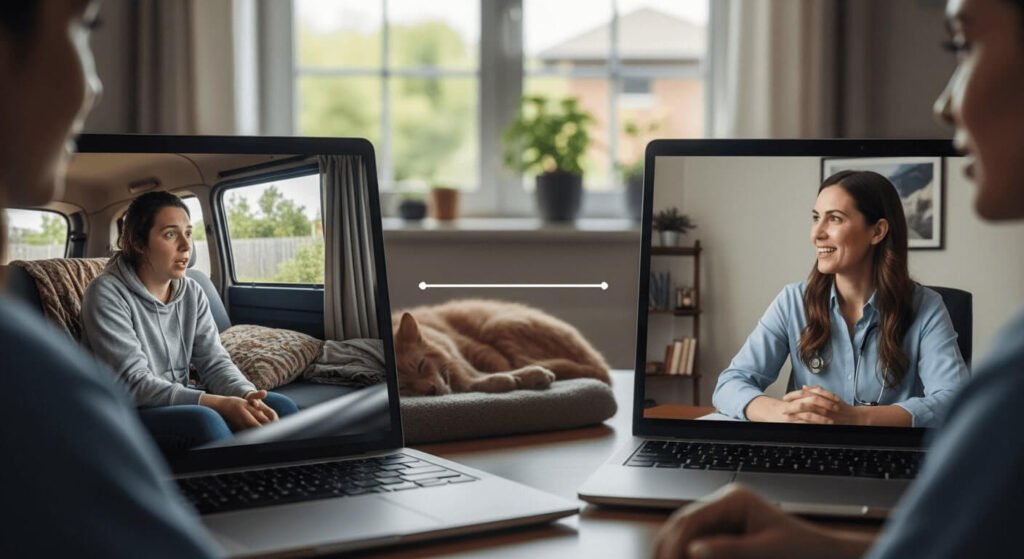
Therapists visit clients in their actual spaces – living rooms, cars parked and backyards, offices, the places where stress occurs. This provides therapists with a greater comprehension
about their client’s life.
For those who find traditional therapy rooms to be intimidating as well as “clinical,” virtual sessions let them feel whole.
The Role of Emotional Safety in Virtual Care
Safety in the emotional realm is the basis of change in therapy. Telehealth can help strengthen the foundation by eliminating:
- The fear of being in the clinic
- Overstimulation of the environment
- In waiting rooms, social anxieties are commonplace.
Clients are more open in a state of being unobserved by outsiders and at home in their own space. This sense of security helps therapy get deeper into the layers early in treatment.
Telehealth Therapy for Anxiety, Depression, and Trauma
The use of telehealth is highly efficient in:
Anxiety Disorders
Virtual care lets clients discuss their anxiety or fear thoughts at home, which is crucial when fear
makes public spaces a nightmare.
Depression
For those who struggle with motivation, removing the need to travel helps keep them motivated to
take care of their needs.
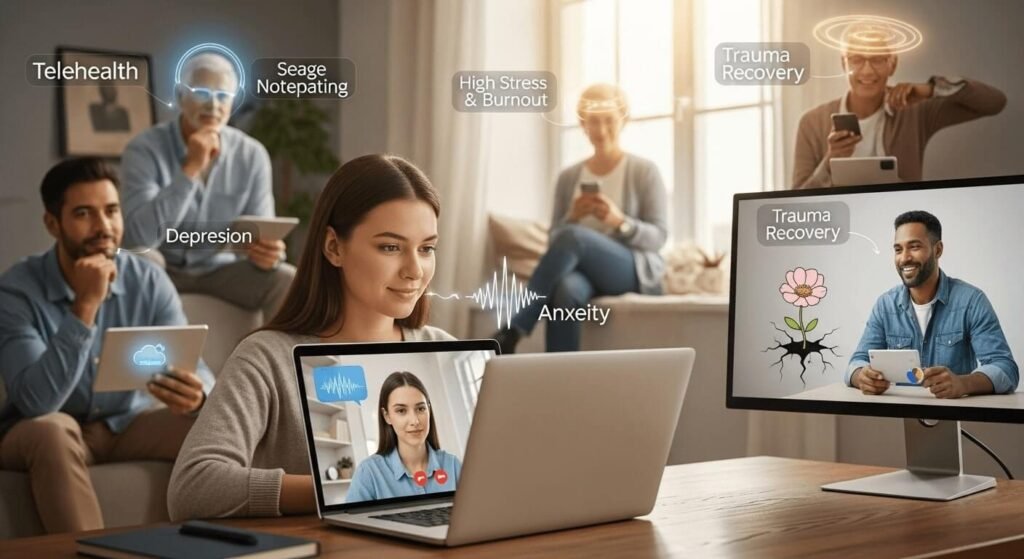
Trauma Recovery
Home settings can help ease the physical strain that trauma victims experience in unfamiliar settings.
High Stress and Burnout
Clients can schedule appointments for breaks, late evenings, or even on weekends, making the stress-management process more effective and predictable.
When Technology Supports Healing
Technology itself is an instrument for healing:
- Secure messaging to check-ins for check-ins
- Virtual worksheets
- Customized coping plans for coping
- Mindfulness recordings
- Tracking symptoms
- Flexible scheduling
These tools help clients to reinforce the progress they have made between sessions, which can lead to the therapeutic process being more effective.
How Therapy From Home Improves Consistency
Consistency is at the core of growth in emotional health. Telehealth eliminates the barriers that normally hinder in-person sessions:
- Weather
- Illness
- Transport issues
- Childcare restrictions
- Work emergencies
If therapy is easy to manage, it becomes more consistent and more stable.
Telehealth for High-Achievers and Chronic Stress Clients
High-achieving professionals—such as doctors, business leaders, caregivers, and others—often put their own emotional needs on the back burner due to demanding responsibilities.
Telehealth offers a secure, flexible, and private space for these clients to address chronic stress, perfectionism, and internal pressures. By meeting clients where they are, virtual therapy helps maintain balance, improve coping strategies, and support long-term emotional well-being.
The Hidden Emotional Weight of Success
The success of a business can create expectations that are difficult to meet. Customers have fears such as:
- “If I slow down, everything will fall apart.”
- “People rely on me; I can’t show weakness.”
- “I don’t deserve rest.”
Telehealth therapy can help clients unravel these beliefs without fear of judgment, which allows clients to break their long-running emotional chains.
Early-Career Burnout in Mental Health Professionals
Mental health professionals, especially those early in their careers, are at high risk for burnout due to emotional strain and demanding workloads. Telehealth provides a flexible and accessible way for these professionals to prioritize their own mental health, offering support that fits their busy schedules.
Learn more about early-career therapist challenges in our Burnout Before Licensure guide. Virtual therapy helps them manage stress, maintain balance, and continue providing effective care to others.
What to Expect in a Telehealth Therapy Session
A typical session will include:
- Review your mood and recent stressors
- Evaluation of strategies for coping used in the course of the course of
- Discussion of the current issues
- Therapy guidance that is tailored to your needs
- Future planning and emotional grounding
Therapy takes place according to the needs of the client and allows them to think, reflect, and release emotions and the development of skills.
Privacy, Confidentiality, and Trust
Telehealth platforms comply with strict security guidelines to ensure the confidentiality of the client. Clients are also encouraged to set up private spaces for:
- A quiet room
- A car parked
- A walk-in closet
- A backyard corner
The combination of safe technology and a personal space helps build trust in relationships with
therapists.
How Our Practice Personalizes Virtual Care
Our Telehealth mental health practice is an individual approach, utilizing:
- The matching of clients with therapists who specialize in their specific needs
- With a variety of session lengths and durations
- Assisting between sessions as necessary
- Incorporating behavioral, emotional, and lifestyle aspects
- The influence of medicine on mental health
- Concentrating on long-term sustainable growth
Customers never get an “one-size-fits-all” experience.
Integrating Telehealth With Medical Conditions
Health and emotional well-being are interconnected with physical health issues. Many people
who have chronic diseases appreciate telehealth because it lets them coordinate with other health professionals.
For those suffering from metabolic, hormonal, or endocrine-related issues, emotional issues are
often a major factor. Telehealth therapy can provide emotional and mental support that improves
their overall well-being.
Telehealth for Endocrine-Related Emotional Strain
Thyroid issues, such as imbalance or chronic fatigue, insulin resistance, or metabolic conditions, can affect motivation, mood, and self-esteem.
Therapy for mental health via Telehealth can help clients:
- Know the emotional consequences of physical symptoms.
- Take care of your frustrations or despair
- Rebuild confidence
- Improve strategies for coping
- Increase consistency in lifestyle
This holistic approach offers clients a better path to equilibrium, physically as well as emotionally.
The Growing Demand for Modern Therapy
Within the United States, demand for mental health services has surpassed all-time highs.
Telehealth is an option that can help:
- People who have limited access to local therapy
- Specialists are not readily located nearby
- Customers who want a private experience
- People balancing demanding lifestyles
- People with mobility issues
Telehealth therapy makes sure that nobody is left without assistance simply due to the place
they live or their work schedule.
Why Clients Stay Longer in Telehealth Care
Success in long-term therapy depends on trust, ease of access, and consistent accessibility.
Telehealth supports long-term engagement because:
- Clients are more relaxed when they’re in the comfort of their own home
- Sessions are much easier to join
- Therapists may be able to provide more flexible timetables
- The therapeutic setting becomes predictable.
- It’s easier to work on your emotions without feeling intimidated
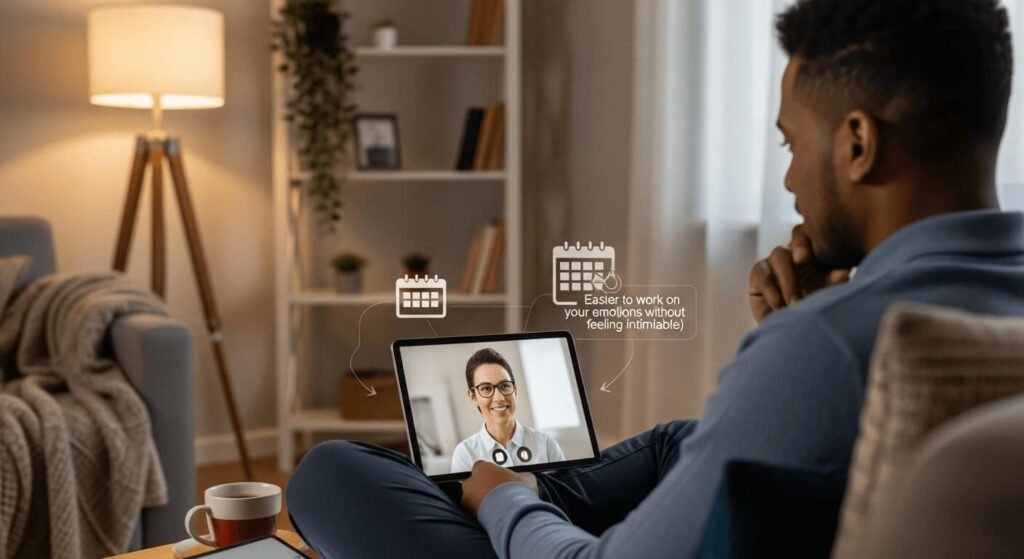
Patients tend to stay with their therapists over time and experience a greater sense of connection with their therapist via virtual sessions.
How to Choose the Best Telehealth Mental Health Therapy Provider
When selecting a provider, take into consideration:
- Credentials and Licensing
- Specializations
- Session availability
- Communication Style
- Privacy practices
- Ability to provide personalized treatment
- Cultural sensitivity
- Experience with telehealth delivery
A trusted telehealth practitioner should allow you to feel heard and respected. They should also be able to provide support regardless of the location you’re in.
Conclusion: Care That Meets You Where You Are
The mental health treatment offered by Telehealth is not just a modern convenience – it is an emergency line. It gives privacy, comfort, and emotional security as well as accessibility to the assistance individuals require in an ever-changing world.
Patients no longer need to choose between their mental health and their daily obligations. Telehealth offers care that is available, empowering, and sustainable. It helps you heal at home,
increases the resilience of your family, and provides support to help you through times that seem overwhelming.
Therapie isn’t confined by time or location. Therapy is now based on real-life experiences, real
challenges and real human connections.
FAQs
Are telehealth therapies as effective as therapy in person?
Yes. Research has shown that virtual therapy can be equally effective in dealing with psychological and emotional issues.
Who is most benefited from telehealth mental health treatment?
People with hectic schedules or anxiety, mobility problems, remote locations, and those who want to be private appreciate it the most.
What equipment do I require?
A smartphone, tablet, or computer equipped with a camera and a private space.
Do I have my data safe?
Yes. Sessions are encrypted and secure platforms that adhere to strict security standards regarding privacy.
Do I have the opportunity to establish a real connection with a therapist on the internet?
Absolutely. A lot of clients feel more connected as sessions take place in a setting that makes them feel secure and centered.