
The emotions we experience are the basis of human beings. Sadness, stress, and anger, as well as
anger and emotions influence our thinking and behavior, as well as how we interact with other people. However, when emotions are excessive, many people search for a quick fix, often through habits that eventually develop into addictions.
Understanding ways to control your emotions without addictions isn’t about denying emotions. It’s about recognizing them, responding with a sense of purpose, and constructing healthy ways to deal with them, particularly in stressful environments such as work or relationships and everyday obligations.
This guide is designed for real people who are under real stress. It focuses on awareness of emotions as well as practical tools, as well as practical strategies to maintain long-term emotional stability.
Why Emotional Triggers Lead to Addictive Behaviors
The triggers for emotional reactions are events or thoughts which trigger intense feelings. The
emotions often drive people towards escape instead of resolution. When feelings feel uneasy or insurmountable, the brain seeks relief. In time, the repetitive coping techniques can develop into dependence.
Common triggers for emotional distress include:
- Chronic stress
- Pressure at work
- Conflict or criticism
- Rejection or loneliness
- Trauma that is not resolved
- Fatigue and fatigue as well as burnout
Knowing how to handle emotional triggers begins by recognizing that emotions are just signals and not threats.
The Science Behind Emotional Regulation
Emotional regulation refers to the ability to recognize emotions, comprehend their meaning, and
then respond to them in ways that are compatible with your beliefs.
When emotions are high:
- The nervous system triggers the survival response.
- The capacity to think is temporarily reduced.
- It is more likely to be impulsive.
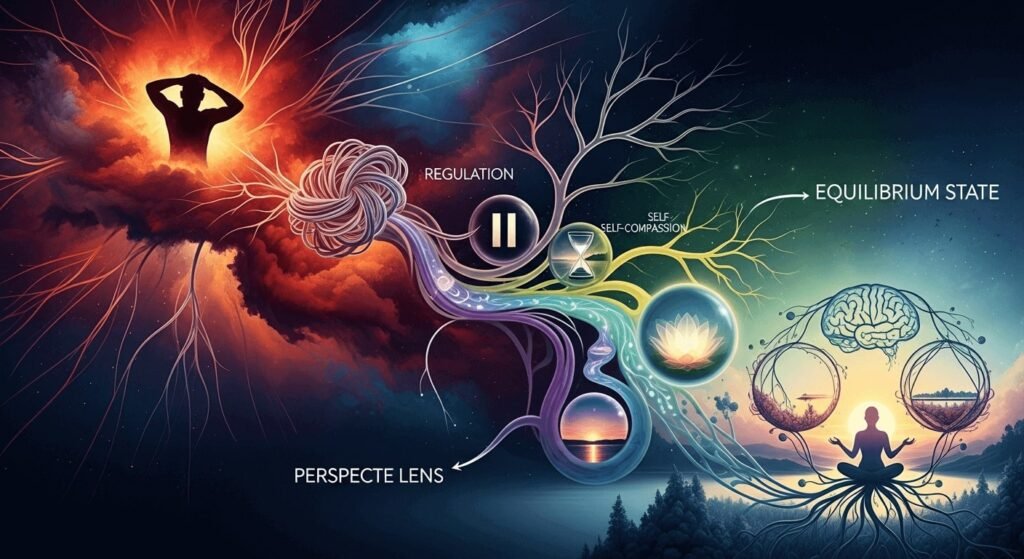
The healthy management of emotions can bring the nervous system to a state of equilibrium.
Emotional Regulation Skills Include:
- Awareness
- Pause and respond
- Perspective
- Self-compassion
- Consistency
Managing Your Emotions at Work: Why It’s Especially Challenging
Professionalism is required in the workplace even in times of intense emotions. Timelines,
performance evaluations, inter-personal conflict, work-related stress can all add to the stress of
emotional turmoil.
The ability to manage your mood at work isn’t about ignoring them. It is about responding
efficiently.
Common emotional problems in the workplace
- Anxiety prior to meetings
- Unhappy with the leadership
- Feeling that you are undervalued
- Pressure to perform
- Emotional exhaustion
The art of how to manage your emotions at work is an essential life skill and not a
vulnerability.
How to Manage Emotional Triggers Before They Take Control
The most effective regulation of emotions takes place prior to the time that emotions increase.
Step 1: Identify Patterns
Notice:
- What kinds of situations consistently upset you?
- Who triggers emotional responses?
- What thoughts pop up first?
A simple journal of your emotions helps uncover patterns.
Step 2: Name the Emotion Accurately
Instead of stating “I’m stressed,” try:
- Overwhelmed
- Disappointed
- Anxious
- Hurt
- Frustrated
Naming emotions lessens their intensity.
Step 3: Pause the Reaction Loop
When it is triggered:
- Take 3 deep breaths.
- The delay time is 90 seconds.
- You can physically ground yourself
This allows your brain to reconnect with logic.
Healthy Alternatives to Addictive Coping
The emotional process is often displaced by addictions. The aim is to replace them with
healthier ones.
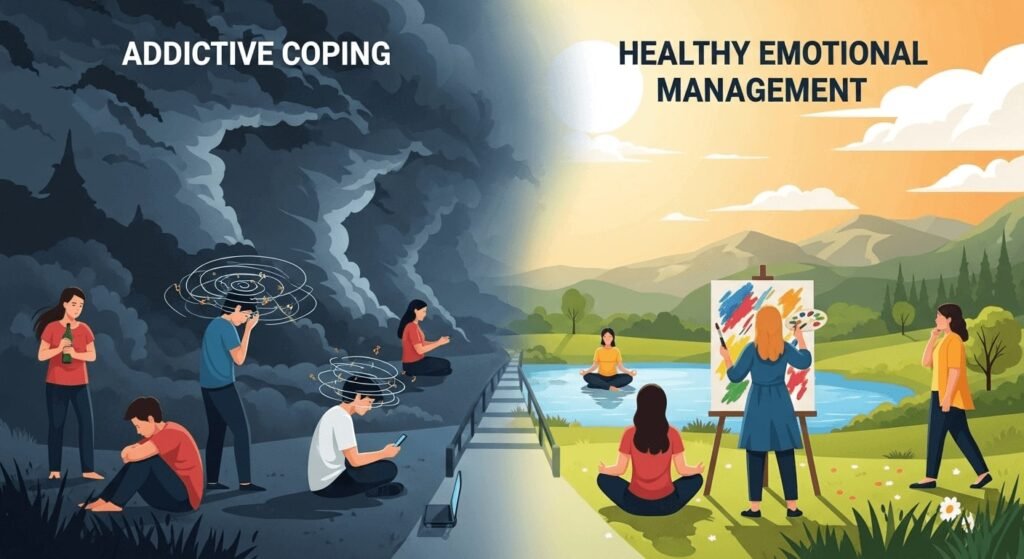
Comparison Table: Coping Styles
| Addictive Coping | Healthy Emotional Management |
| Avoidance | Awareness |
| Suppression | Expression |
| Escaping | Processing |
| Instant relief | Stability over the long term |
Building Emotional Strength Without Dependence
Strength in the emotional realm is developed through perseverance, not the pursuit of perfection.
Daily Practices That Support Emotional Balance:
- Morning grounding routine
- Physical movement
- Sleeping in a healthy way
- Nutrition that is balanced
- Reducing emotional oversaturation (news or social media, etc.)
These practices improve mood and reduce emotional reactivity.
Managing Emotions in the Workplace Without Burnout
Professional settings often favor emotional suppression. However, suppression can lead to burnout.
Practical Strategies at Work:
- Set emotional boundaries
- Set expectations clearly
- Make sure you take regular breaks
- Practice neutral responses
- Find support whenever you need it
The ability to manage emotions in the workplace can help improve both mental and physical well-being.
Emotional Intelligence at Work
Emotional intelligence (EQ) includes:
- Self-awareness
- Self-regulation
- Empathy
- Communication
- Conflict resolution
High-EQ professionals:
- Handle pressure calmly
- Make sure you communicate clearly
- Establish trust
- Avoid reactive decisions
Table: Emotion vs Professional Response
| Emotional Trigger | Professional Response |
| Criticism | Reflection and curiosity |
| Conflict | Calm dialogue |
| Stress | Prioritization |
| Anxiety | Preparation |
A Real-Life Emotional Shift Story
An employee in mid-career told of being constantly in a state of anxiety. Deadlines felt suffocating. Little mistakes could be catastrophic. Even nights were no relief.
The pivotal moment wasn’t about shifting jobs; it was learning about how to regulate emotions. Through identifying triggers, establishing boundaries, and acting in a controlled manner to pressure, it became easier to lose control.
The job was always challenging. The stress levels decreased.
Why Avoiding Emotions Makes Them Stronger
The emotions that aren’t processed won’t disappear. They resurface, and are often more powerful.
The rate of avoidance rises:
- Reactivity to emotions
- Dependence on escape behavior
- Long-term stress
The ability to control emotions is diminished when you are calm. power.
Long-Term Emotional Management Plan
1: Awareness
- Find the triggers
- Monitor emotional responses
2: Skill Building
- Techniques for breathing
- The thought of reframing
- Assertive communication
3: Integration
- Employ your skills in the workplace
- Develop the art of emotional flexibility
- Maintain the consistency
How to Manage Emotions Without Addictions Long-Term
Healthy emotional well-being comes from:
- Accepting feelings
- Responding in a deliberate manner
- Establishing routines that support you
- Needing help whenever required
It is a good idea to choose the path of least resistance over escape.
Frequently Asked Questions (FAQs)
How do I manage emotion without having to rely on bad behaviors?
By developing awareness, slowing down reactions and reversing avoidance by healthier strategies to cope such as movement or communication and reflection.
Which is the most effective method to deal with workplace emotional triggers?
Know the triggers before they occur, keep boundaries in your professional life, and react with a thoughtful response, rather than reacting.
How can emotions be more difficult to manage at work?
Since expectations of being calm often come up against internal pressure, stress as well as interpersonal tensions.
Do emotional regulation help to prevent addiction?
Yes. If emotions are dealt with instead of avoiding them the need to escape behavior decreases dramatically.
How long will it take to develop your skills in managing emotions?
The process usually begins in a few weeks, but lasting improvement is seen over time as you continue to repeat.