
Mental health self-care is essential because mental health professionals often face emotional challenges that most people cannot fully understand.
Mental health professionals are involved in a one-way, caring working environment in which they are expected to demonstrate compassion, understanding and sensitivity towards their clients, without expecting their clients to respond in the same way. Because of this one-way relationship, they exert an enormous amount of time and energy and chance of suffering from burnout.

Although their jobs are essential however, it exposes them to extreme emotional demands, constant stress, fatigue from compassion, and eventually, burnout.
This is where self-care comes into play as a necessity for professionals to ensure the mental health professional can be healed just as they treat their patients.
Self-care encompasses a variety of activities that people take to improve, maintain, or recover their health, reduce or prevent illness and to maintain their overall health.
In light of its importance to improving the wellbeing and long-term sustainability of mental health personnel, it’s essential to know the importance of self-care in the field of mental health as well as how professionals in the field can apply it into their work.
Emotional Demands and Risks in the Mental Health Profession
Therapists, psychiatrists, counselors as well as other mental health professionals are usually trained to assist their clients during the trauma, grief and anxiety, crisis, and the overwhelming emotion. Because the field of mental health is extremely demanding and exhausting and frequent exposure to client’s problems and stressors can put mental health professionals at risk of being a victim of
- Burnout
- Professional effectiveness is reduced
- Emotional exhaustion
- Compassion fatigue
- Vicarious trauma
When mental health professionals continuously avoid self-care, the results impact the patients as well as the company as well as the mental health professionals.
Core Components of Self-Care for Mental Health Professionals
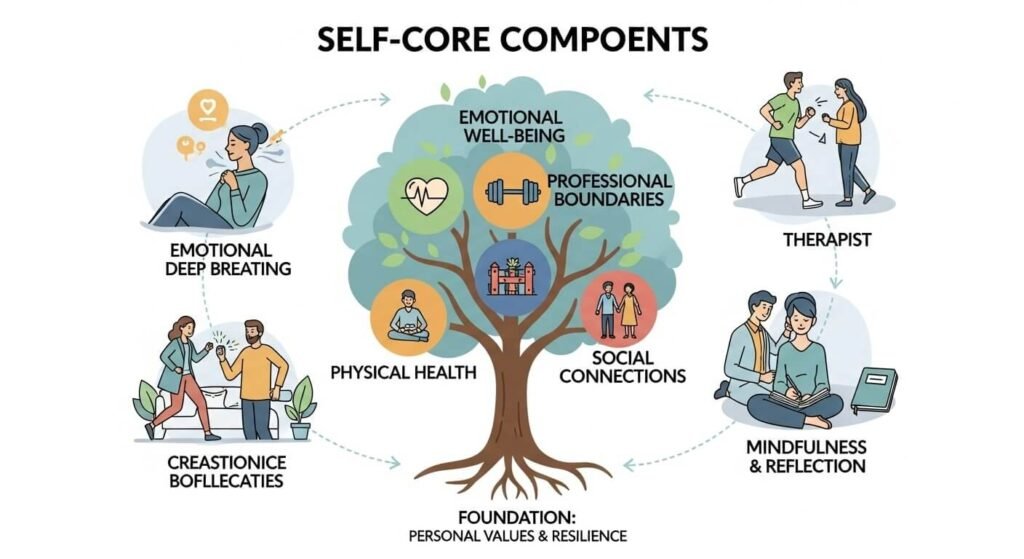
Research has previously identified several important aspects of self-care in mental health professionals, such as:
Self-Awareness
Self-awareness involves recognizing the responsibilities of working as a mental health professional, along with understanding the potential risks of the role, including early signs of burnout.
By developing self-awareness, therapists can set realistic expectations for their work, evaluate their performance more effectively, and better understand the stressors they may encounter. This awareness helps them identify appropriate strategies to manage emotional and professional challenges.
Mental health professionals can enhance their self-awareness in a significant way through:
- Participating in mindfulness and meditation training
- Self-reflection
- Creative writing
But, some researchers believe that excessive self-awareness could distract therapists, hampering their professional work (much as too much of something is harmful).
Balance
Balance is among the most important self-care elements which is characterized by a sense of fulfillment or satisfaction in a variety of important areas without negatively impacting other areas.
Mental health professionals should keep balance in their personal and professional lives. In ensuring a healthy work/life equilibrium, mental health professionals can prevent anxiety, stress at work and anxiety, which can lead to burnout.
Therapists can help to achieve balance through:
- Engaging in professional tasks, for example, teaching and training
- Engaging in leisure
- Achieving interests, passions and relationships that aren’t work-related.
Flexibility
Flexibility refers to the many fluid processes that aid therapists adjust to the stress. This may involve using efficient strategies to cope and staying flexible and able to adjust and grow out of stress.
Some strategies for flexibility include:
- Emotional regulation techniques like cognitive reappraisal
- Reviewing and revising their goals in the workplace
- Writing to share ideas
- Engaging in professional education and development.
Physical Health
Concerning physical health, self-care is about focusing on sleep, exercise and a balanced diet. Because of the high level of sedentary work of the profession of mental health, a lot of therapy professionals are susceptible to physical health problems such as back and neck tension, as well as fatigue.
Therapists might also experience discomforts with their bowels, headaches as well as fatigue. Many therapists complain of symptoms of insomnia as well as problems with sleep since stress from work greatly affects the quantity and quality of sleep.
Therapists can take part in effective methods of sleep hygiene, such as:
- Do not sleep if you are thirsty or hungry.
- Sleeping in a consistent and regular manner
- Relaxing and creating a tranquil sleeping space
- Sleep habits that are self-monitoring
Social Support
Social support is defined as the relationships and support provided by others that aid the therapist cope with stress-inducing situations. Isolation is one of the risk factors that is associated with burning out within the field of mental health.
Social support sources include:
- Support from friends and family
- Individual or group supervision
- Therapy sessions with a personal counselor
- Programs to help colleagues
- Participation in professional associations
- Professional assistance from colleagues, mentors, advisors, supervisors, and professors.
Spirituality
Spirituality refers to a person’s sense of meaning, purpose, and connection—whether to personal values, inner beliefs, nature, or a greater sense of wellbeing. For many mental health professionals, spirituality can be an important source of resilience and emotional grounding.
Spiritual practices may help reduce stress, increase self-awareness, and support emotional balance, particularly in demanding professional roles. When approached in an inclusive and personal way, spirituality can enhance wellbeing without being tied to any specific religious belief.
Common practices may include:
- Mindfulness and present-moment awareness
- Reflection on personal values and purpose
- Nature-based activities
- Finding meaning in one’s professional work
Importance of Self-Care Among Mental Health Professionals

Self-care is vital for mental health professionals because it:
- Aids mental health professionals deal with their work responsibilities as well as workload and work demands
- Aids mental health professionals achieve an improved work-life balance
- Protects the wellbeing and health of mental health professionals.
- Enhances the satisfaction of work among professionals in mental health
- Aids mental health professionals to develop structures and predictability during times of chaos and uncertainty.
- Reduces levels of stress among mental health professionals.
- It plays a vital role in assisting mental health professionals to balance their personal needs with the needs of their patients
- Improves the quality of service the mental health professional offers to their clients.
Why Self-Care Is Not Common in the Mental Health Profession
Many people in the field of mental health recognize how important self-care can be, However the reality is more complex.

Although many therapists are aware of how important self-care is many struggle to practice it consistently or incorporate it into their professions because of:
- Huge caseloads
- The resources for work are not sufficient and there is a lack of time.
- Personal expectations
- Culture of the workplace.
Supporting Mental Health Professionals
Health professionals in the field of mental health play an important contribution to society.
Being there for them professionally, emotionally and physically is vital to ensure they will continue to provide their essential services with compassion and understanding.
Self-care isn’t a choice or selfish.
It’s a foundation for sustainable, ethical and fulfilling mental health practices.
A common theme in the field of mental health taking care of therapists is just as important as taking care of clients.
Frequently Asked Questions (FAQs)
1. What is the importance of self-care for professionals in mental health?
Self-care assists mental health professionals deal with the emotional pressures, decrease burnout, ensure their wellbeing, and offer high-quality care to their patients.
2. What are the most significant threats to mental health professionals with self-care?
Professionals who do not take care of themselves are susceptible to emotional exhaustion, burnout, diminished effectiveness, compassion fatigue and Vicarious trauma.
3. What are the essential elements of self-care in the practice of mental health?
Important components include self-awareness, the ability to balance, flexibility, wellbeing, social assistance and spirituality.
4. Why do so many healthcare professionals struggle to implement self-care?
Common obstacles are heavy caseloads as well as limited resources and time, the working culture and individual expectations.
5. How can self-care help enhance the outcomes of clients?
Self-care helps regulate emotions, empathy, compassion, and sustains the care provided, enabling professionals to help clients better.
Conclusion
Self-care is a responsibility of professionals in the field of mental health and is not something that is a luxury. With the intense emotional and demands of work in the field of mental health continuous self-care promotes moral practice, personal health as well as long-term sustainability. By taking care of themselves mental health professionals safeguard not just themselves but also the quality and stability of the care they offer to their patients.