
Each major life shift has an impact that you often feel before taking the first step. Life transitions can be exciting, but they also commonly trigger anxiety and depression during life transitions. Whether it’s moving to a new city, starting a new job, becoming a parent, or navigating relationship changes, these shifts can create emotional stress and uncertainty. Recognizing these feelings early and learning effective coping strategies can help you manage change with confidence and resilience.
Usual U.S. life transitions that can cause stress in the emotional sphere are:
- Transferring to a different city or even a different state
- Change of jobs or career paths
- College admission or graduation
- Divorce or marriage break-up
- Being a parent
- Uncertainty in the economy or job loss
- The chronically ill, the diagnosis or providing care
- A loved one’s death
- Retirement or adjusting to empty nest life
Positive changes, however, can seem overwhelming due to the fact that the mind is trying to adapt to the new environment faster than it can.
Why Anxiety and Depression During Life Transitions Occur
Every moment in life can challenge your sense of security.
As routines change your brain produces stress hormones, causing you to feel anxious or exhausted. The routine that was once regular becomes unfamiliar and uncertainty is a constant.
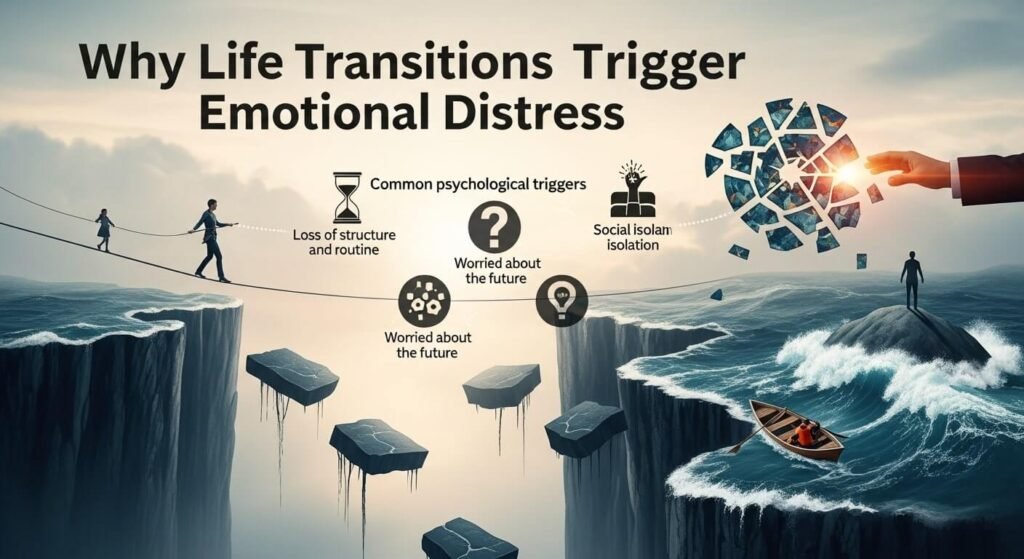
Common psychological triggers are:
- Be afraid of losing the control
- Be worried about the future
- Role changes or financial pressure
- The loss of structure and routine
- Social isolation or a lack of support
- Identity changes
- Responsibility increased
These internal reactions don’t signify that your character is weak. They just indicate that you’re human.
Common Types of Anxiety and Depression During Life Transitions
The feeling of anxiety is not similar, and knowing the kind of anxiety helps you deal with it better.
U.S. adults commonly experience:
Generalized Anxiety
A constant feeling of worry regarding the future or anticipated changes.
Adjustment Difficulty
Stress and emotional strain can be felt when you are adjusting to a different setting or environment.
Social Worry
Afraid of the unknown Expectations, new surroundings, or encountering new people.
Panic Episodes
Insane waves of fear, rapid heartbeats, chest pressure and dizziness.
Health-Related Worry
Stress and physical symptoms that occur can be a sign of the presence of a serious illness.
Relationship Instability Anxiety
Insecurity or fear of being abandoned when a relationship is changing.
Career and Financial Anxiety
Uncertainty when promotions, job losses, or career changes.
Every type of issue can be dealt with using appropriate tools, and assistance.
How Common Are These Conditions in the U.S.?
Health concerns related to mental health that arise during life transitions are more prevalent than most people realize.
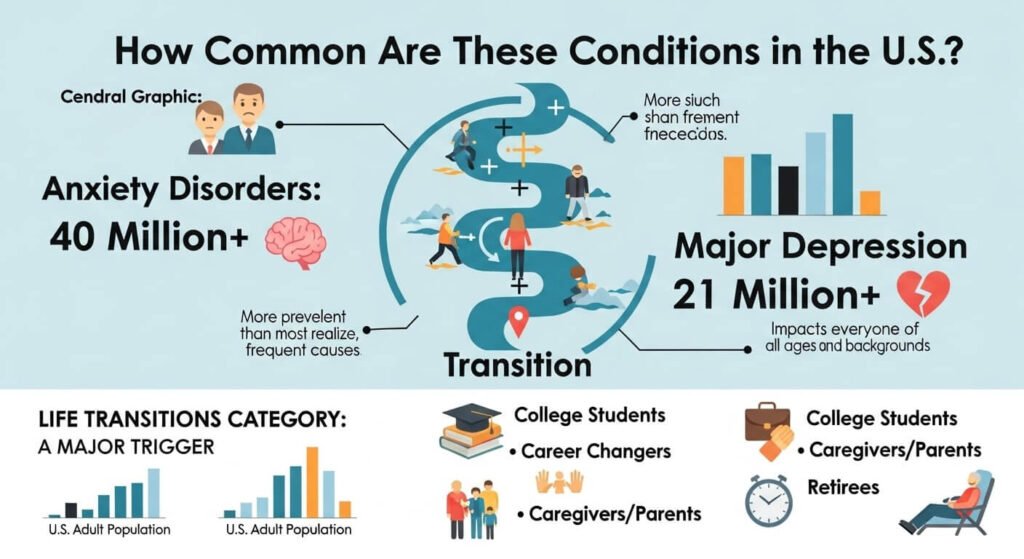
Recent data from the nation show:
- More than forty million U.S. adults struggle with anxiety disorders every year.
- Over 21, million suffer from major depression episodes
- Life transitions are among the most frequent causes
- College students and professionals changing careers are particularly affected
- Caregivers, parents and retirees report the stress of emotional turmoil that comes with major shifts
Transitions impact everyone of all ages and backgrounds.
Recognizing Symptoms: What to Watch For
A majority of people find themselves feeling “off” long before they recognize they’re suffering.
Noticing signs early can help prevent a more severe decline in emotional health.
EMOTIONAL SIGNS
- Feeling overwhelmed
- Persistent sadness
- The mood swings or irritability
- Loss of interest
- Numbness in the emotions
COGNITIVE SIGNS
- Race-related thoughts
- Forgetfulness
- Trouble concentrating
- Overthinking
- Negative assumptions
PHYSICAL SIGNS
- Fatigue
- Tension headaches
- Chest tightness
- Digestive changes
- Trouble sleeping
BEHAVIORAL SIGNS
- Avoiding responsibilities
- Social withdrawal
- Procrastination
- Low motivation
These signs indicate that you might need more support, but not because you’re failing.
Why Transitions Feel So Heavy
Change alters the rhythm that your brain relies upon.
When the foundation changes, your brain goes into an alert mode, trying to anticipate what will happen in the future. This causes emotional tension.
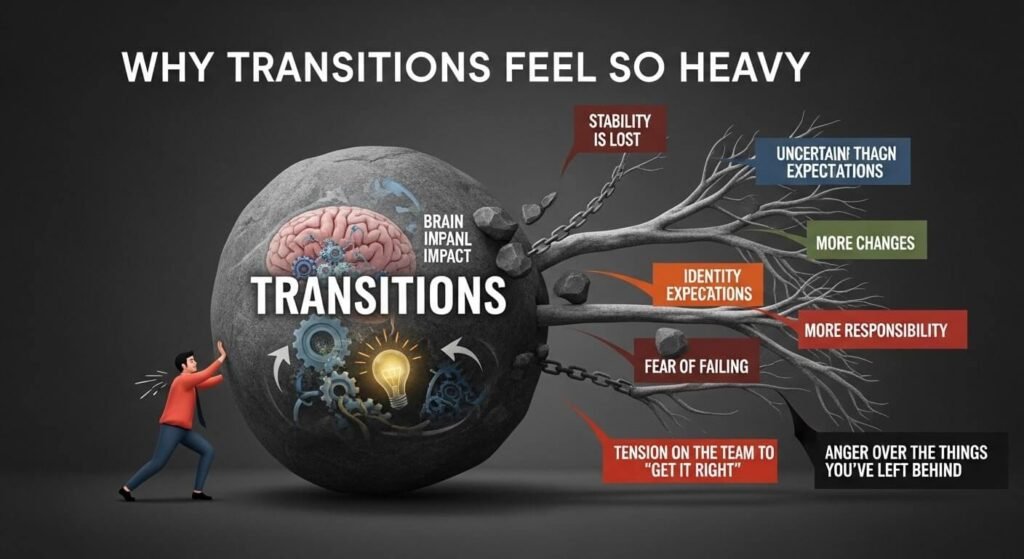
Principal causes include:
- Stability is lost
- Uncertain expectations
- Identity changes
- More responsibility
- Fear of failing
- Tension on the team to “get it right”
- Anger over the things you’ve left behind
Even the most exciting of changes can cause emotional stress since the brain requires time to adapt.
How Anxiety and Depression Are Diagnosed in the U.S.
Professional evaluation aids you to recognize what’s going on and not identify you, but instead provide guidance.
Mental health providers generally employ:
- Interviews with a clinical psychologist
- GAD-7 and PHQ-9 assessments
- Review of stress and medical historiography
- Screening for thyroid or hormone issues
- Assessment of appetite, sleep and day-to-day functioning
A diagnosis is essentially an outline of the proper assistance.
Treatment Options for Anxiety and Depression During Life Transitions
Healing becomes more efficient using a combination of expert care and daily routine.
Therapy
Therapy offers you an opportunity to explore your feelings and not feel belittled.
Common methods are:
- CBT (CBT): Reshapes the patterns of thinking that are not helpful.
- Acceptance and Commitment Therapy (ACT): Strengthens emotional flexibility
- Interactive Therapy Facilitates relationship building and the role of the individual.
- A trauma-informed therapy helps those who have carried old wounds through new transitions
- Therapy that is focused on solutions: Provides clear, specific steps to address immediate issues
- Therapy for groups: Lowers the isolation of a group and increases connection
Medication
If the symptoms feel too heavy, medication may give you some stability.
Common choices are:
- SSRIs (Lexapro, Zoloft, Prozac)
- SNRIs (Duloxetine, Effexor)
- Buspirone for anxiety that lasts a long time
- A short-term anti-anxiety medicine when clinically required
The medication is individualized to each individual, and closely monitored by health experts.
Lifestyle-Based Support
Little daily actions can be powerfully influential.
Some helpful adjustments include:
- Regular exercise
- Sleep routine
- Reduction of alcohol and caffeine
- Nutrition that is balanced
- Social connections
- Grounding or mindfulness practices
These habits will strengthen your emotional foundation in uncertain times.
Coping Techniques for Daily Stability
If life seems chaotic, simple habits can help to stabilize the mind.
Try:
- Techniques for grounding or deep breathing
- The writing down of thoughts and ideas
- Breaking down tasks into small steps manageable
- Setting boundaries
- Making connections with trusted friends or family members
- Making small wins a part of your day
- Understanding what’s within your control and what’s not
These tools can help you reduce stress and anxiety while trying to adjust to changes.
Can These Conditions Be Prevented?
Although no one can stay away from emotional discomfort, preparing can lessen the severity.
Strategies for prevention comprise:
- Plan ahead
- Making routines that are predictable
- Looking for support from the beginning
- Social networks that are strong and enduring
- Instilling self-care habits
- Making sure expectations are flexible
The ability to prepare reduces fear and anxiety, which is often the source of stress and anxiety.
Living With Anxiety and Depression During Transitions
Your life isn’t interrupted when you’re going through a change, but you can navigate through it with confidence and vigor. Supporting yourself daily will ease the burden of emotional stress.
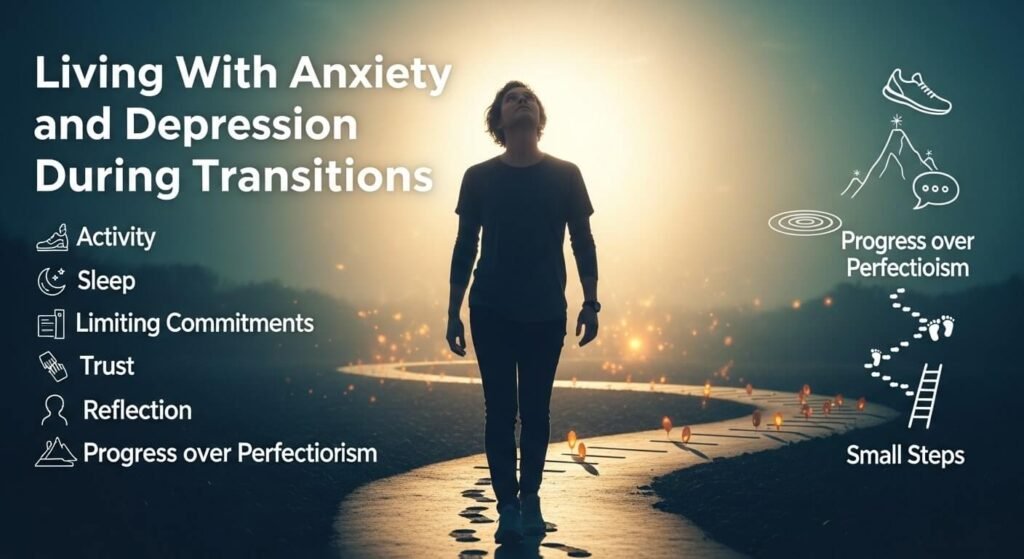
Practical tips:
- Be physically active
- Stay on schedule for your sleep
- Speak freely with a person whom you can trust
- Limit commitments that are too overwhelming
- It is better to practice reflection than to suppress
- Concentrate on progress rather than perfectionism
Small steps can change the way you handle large changes.
When to Seek Professional Help
The act of reaching out for help is an indicator of strength, not weak. You should consider assistance from a professional
- The symptoms last for more than two weeks
- Anxiety affects daily functioning
- You may experience panic attacks.
- The emotions feel out of control
- You begin to take a break from your obligations
- You are feeling despairing or overwhelmed
Early treatment leads to more positive outcomes and more smooth transitions.
Frequently Asked Questions
- Are you experiencing anxiety in the midst of major life changes? Do you feel uncomfortable? It is true that emotional stress is a natural reaction to your identity or routine shifts.
- How long will symptoms last? Most symptoms improve within weeks or months if they are treated correctly.
- Do transitions cause long-term problems? If they are not addressed however, early intervention can prevent aggravation.
- Do lifestyle changes help with mild symptoms? Absolutely. Sleep and nutrition, exercise and support from friends have a significant impact on.
Final Thoughts
Life transitions are often characterized as emotional storms. However, they pass with time. Depression and anxiety during these stages aren’t indications of your own failure; they are just normal reactions to change. With the right tools that provide guidance, direction, and support you’ll be able overcome difficult situations with a sense of confidence, strength and clarity.
If you’re considering trying something fresh or giving up something you’ve tried before, keep in mind that you’re made to evolve and change. It’s not necessary to make the change by yourself.