
The journey to becoming a therapist is often portrayed as purposeful and inspiring, but many trainees face emotional pressure long before receiving their license. Burnout in therapists-in-training has quietly become a widespread issue in the mental health field. Understanding why this happens — and how supervision can protect trainees — is essential for supporting the next generation of clinicians.

The Hidden Struggle Behind a Therapist’s Early Journey
Stepping into the mental health field should feel like stepping into a calling yet for many therapists-in-training, it begins with emotional weight they never expected. Therapists at the candidate-level enter the profession motivated by curiosity, compassion and a desire to assist others in healing, but the initial years can challenge their faith more than they had. Hours of work, emotional client stories and unrealistic expectations are what follow each session. And unlike seasoned clinicians, they do not yet have the inner tools or professional grounding to carry the load without internal cost.
This early strain creates a quiet crisis burnout before licensing something rarely discussed openly but widely experienced.
When Passion Meets Pressure
Each therapist who is a candidate enters into the field with the hopes to make a difference but many soon realize that even the best intentions won’t safeguard their emotional and mental wellbeing. The emotional stress of grief, trauma anxiety, conflict in the home, and loss can be a tense particularly for those who are still trying to establish healthy boundaries in their therapy. Listen, they keep space and remain calm even if their own sense of stability is fragile.
In this phase the pressure can be immense. Trainees must perform just like professionals with licenses, but without the expertise, confidence or coping skills. They must manage multiple responsibilities, including sessions of case notes, documenting as well as supervision meetings. They are usually full-time jobs or financial strains. In the midst of everything else, is the question whether they are doing enough? Am I doing enough?
Why Burnout in Therapists-in-Training Begins So Early
The early onset of burnout is not simply exhaustion, it is a gradual collapse of emotional energy, highlighting the importance of emotional healing before achievement. Trainees are often unable to see this because they’re taught to concentrate on their client, not themselves. The effects of emotional fatigue, decreased empathy and self-doubt as well as irritability and a sense of disconnection slowly take over.
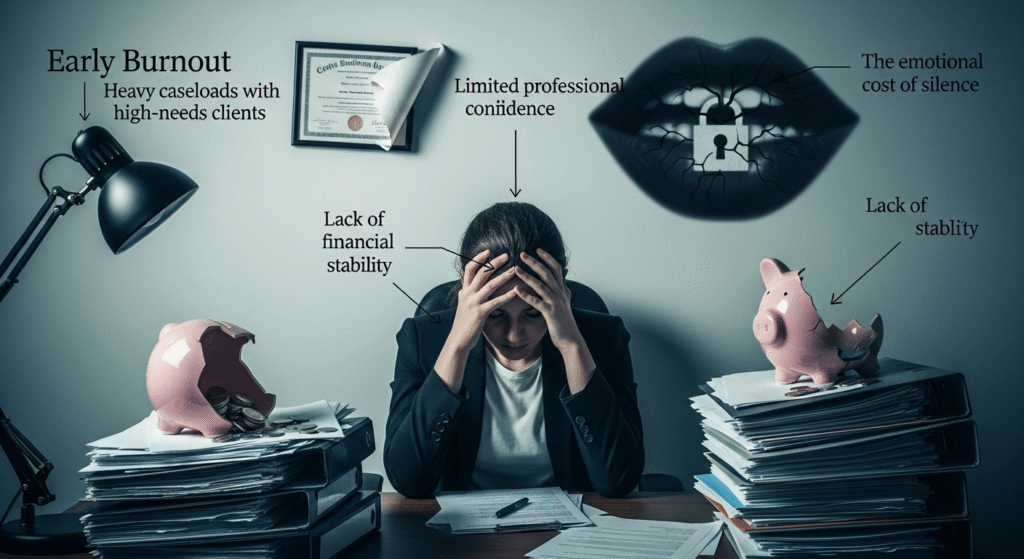
Many factors contribute to early burnout becoming nearly unavoidable:
-
Heavy Caseloads and Stress in Therapists-in-Training
Trainees often receive the most complex or underserved populations, which demands emotional maturity they are still developing, according to therapist burnout statistics.
-
Lack of financial stability
Many are unpaid, underpaid, or even paying for supervision while also managing student debt.
-
Limited professional confidence
Without years of experience, every crisis, every difficult session, every moment of uncertainty feels magnified.
-
The emotional cost of silence
Trainees hesitate to admit they are struggling because they fear judgment or being seen as unfit for the profession.
Over time, this combination leads to a slow erosion of enthusiasm, empathy, and hope — the core qualities they need most to succeed.
The Emotional Toll Few Talk About
A major and difficult aspect of early burnout is how little it is noticed, which can worsen burnout in therapists-in-training if proper support and supervision are not provided. Trainees believe they need to be tougher, stronger and more resilient even when they’re falling apart inside. They compare themselves to experienced clinicians and think that they must have something wrong.
There is nothing wrong with these people. They’re just carrying an amount of weight that no one should be able to carry on their own.
Therapists at the level of candidate often attend supervision sessions with the intention of sounding calm even though they are overwhelmed. They are reluctant to discuss their feelings of fatigue, as they think that it will reflect badly on their careers in the future. It becomes an unavoidable burden.
Why Supervision Becomes the Lifeline
In a field that relies on emotional work, supervision is the only safeguard against burnout in therapists-in-training, helping them manage emotional fatigue and build resilience. It’s not the checkbox-style version that supervises, but authentic solid, empowering, and grounded supervision that treats the student as a person in all aspects, not just a clinician training.
A good supervisor can create an environment where students are able to freely express their opinions. They assist the trainee in exploring doubts without fear of shame.
They normalize imperfection. They teach boundaries. They redirect unrealistic expectations. And they remind trainees that compassion must be offered both outward and inward.

Effective supervision protects trainees in meaningful ways:
-
It builds emotional resilience
By helping them process their emotional reactions rather than suppressing them.
-
It strengthens professional identity
Confidence grows when someone experienced says, “You’re doing this well. Let’s grow from here.”
-
It helps trainees set realistic expectations
Because perfection is not the goal, steadiness is.
-
It models self-compassion
Trainees mirror what they observe in supervisors.
In contrast, poor supervision becomes a risk factor creating distance, fear, judgment, and emotional isolation.
The Difference a Thoughtful Supervisor Can Make
A single meaningful supervision session can shift the emotional direction of a trainee’s entire week. A supervisor who listens, guides, validates, and challenges in a compassionate way becomes a stabilizing presence in an unstable chapter of a trainee’s career.
When trainees are supported, something powerful happens:
They breathe again.
They remember why they chose this work.
They feel capable instead of overwhelmed.
They experience growth instead of fear.
Supervision becomes more than evaluation, it becomes protection.
A Profession at a Turning Point
The mental health industry is facing a growing problem: the rate of retirement for veteran clinicians is on the rise and early-career therapists are quitting the field before getting licensing. Demand for services in the field of mental health is more than ever before, and yet the new generation of therapists is going through the fire at the start of the line.
If we wish to have a long-lasting development of mental health services and the wellbeing of students, therapists should not be considered an extra-curricular consideration. Their mental health directly impacts the health of the entire profession.
What Candidate-Level Therapists Need Most
Trainees do not need perfection. They do not need endless endurance. They need support — real, accessible, consistent support that protects their emotional capacity while they learn to navigate a demanding profession.
Here is what strengthens them the most:
- Supportive supervision grounded in empathy
• Realistic caseload expectations
• Training in emotional boundaries and self-care
• A safe space to talk about burnout without judgment
• Encouragement to honor their own limits
When these needs are met, trainees thrive. When ignored, burnout becomes inevitable.
Conclusion
The initial years of being a therapist are full of both pressure and purpose. Burnout in therapists-in-training is a serious concern, as candidates often give so much of themselves before knowing how to safeguard their psychological well-being. Without proper guidance, burnout is more than just a threat — it can become a significant barrier to licensure and long-term career satisfaction.
With the support of a thoughtful supervisor, trainees can navigate this challenging phase more effectively. They learn to manage their emotions, understand their limitations, and grow through purpose rather than anxiety. Their passion is sustained, their confidence grows, and the profession benefits from new clinicians who are stable, grounded, and prepared for the future.
Supporting therapists-in-training is an investment in the future of mental health. When we prioritize their emotional well-being, we ensure the quality of care for generations to come.
FAQs
1. Why do therapists-in-training burn out before licensure?
They are often faced with emotional demands, a large caseload as well as financial pressures and a lack of experience while attempting to handle the emotional heft of their clients’ experiences. If they don’t have support, the situation quickly becomes difficult.
2. What can the supervisor do to ensure that they don’t burn out?
Supportive supervision provides an emotional basis and expert guidance and support, as well as the assurance of a secure location to handle anxiety. It builds resilience and reduces the emotional burden that trainees are often left to carry by themselves.
3. What are the first indications of burnout in trainees?
Stress, anxiety, and feeling of numbness. It may also lead to an increase in confidence in oneself, empathy, difficulty in concentration and a feeling of ineffectiveness.
4. What happens if supervision is not as good or distant?
Trainees feel unsupported, judged and feel emotionally disconnected. This causes stress, decreases confidence and increases the risk of burnout.
5. What can training programs do to better aid new therapy professionals?
By encouraging wellness-focused supervision, offering burnout education by ensuring that caseloads are realistic and allowing for emotional processing and providing an accessible option for supervision.