
Atonement vs Forgiveness are two concepts often used interchangeably when dealing with emotional trauma, but they are not the same. Traumas that affect the emotional side—such as betrayals in intimate relationships, reckless decisions, or emotional neglect—can leave lasting impacts for years.

Understanding the real distinction between atonement and forgiveness is vital to heal emotional injuries, restoring relationships and finding peace within. If these concepts are not understood and interpreted incorrectly, people can be trapped in a state of frustration, waiting for results that might never materialize.
Why Atonement vs Forgiveness Matters for Emotional Healing
Many emotional wounds remain unhealed not because people aren’t willing to be healed, but rather because expectations aren’t clear. Many believe that healing can’t start until an apology is accepted, while other people believe that an apology will automatically result in forgiveness. These beliefs often result in frustration, tension and emotional discord for both the parties.
The basic distinction is clear: forgiveness belongs to the person who was wounded in the first instance, whereas atonement is for those who caused the injury. Once the distinction is established the process of healing is no longer dependent completely on someone else’s actions and is a more empowered autonomous process that is self-directed.
Forgiveness in the Context of Atonement vs Forgiveness
It is an inner process. It doesn’t require reconciliation, re-establishing trust or communication with those who did the hurt. Instead, it’s an individual choice to let go of anger, resentment and feelings of attachment towards the hurtful event.

It doesn’t mean that the damage never happened or that the conduct was not unacceptable. Forgiveness simply means that the situation doesn’t control your thoughts, emotions or self-image. In time the emotional release restores balance and opens up an environment for clarity and peace.
The Emotional Cost of Holding Onto Resentment
Resentment and anger that are not addressed can have a major impact on mental and emotional health. A constant state of anger can keep our nervous systems in a constant state of alert. This makes the process difficult for people to be secure in a calm, relaxed, or at peace.
In time, this may result in anxiety as well as chronic stress, difficulties in concentration, and an increase in emotional reactivity even in non-related situations. In this way, forgiveness is not about minimizing the damage, but rather decreasing the burden on your internal system by carrying the burden forward.
What Forgiveness Can – and Cannot – Do
Forgiveness is a powerful tool, but it’s often not understood. It can help ease emotional stress and restore inner balance and let go of emotional and mental energy linked to the pain of the past. In the long run it improves the emotional state and allows forward motion with more clarity.
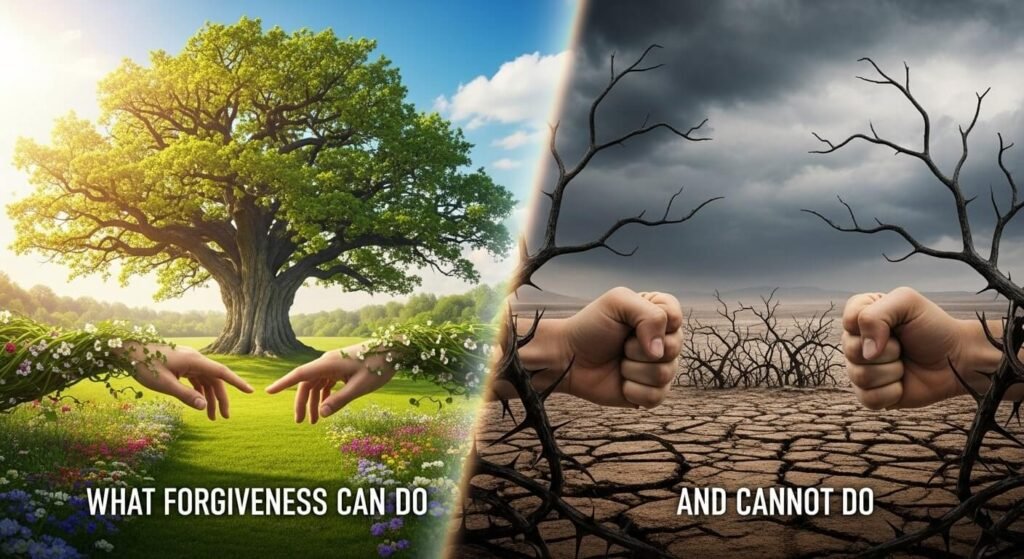
But forgiveness doesn’t erase the consequences, instantly rebuild trust, or ensure reconciliation. It does not also require abandoning boundaries. In fact forgiveness and boundaries typically can be a great combination for healing that is healthy and long-lasting.
Atonement as an Act of Accountability
As opposed to forgiveness, atonement can be described as an external procedure. It involves the person who has caused harm to another person acknowledging their mistakes, accepting accountability, and acknowledging the true consequence of their conduct on someone else.
Atonement that is true goes beyond the intent. It is about facing the consequences without defense or justification. Instead of protecting one’s self image, atonement shows the integrity, accountability and acceptance of the emotional experiences of other people.
Why Apologies Alone Are Not Enough
A word without a change is rarely a path to healing. A short or superficial apology that is not backed by an action, can often exacerbate emotional pain, rather than ease it.
A meaningful atonement is a clear acknowledgment of the consequences of the offense by the offense, confessing remorse in a sincere manner, accepting responsibility and without condition and making commitments to behavioral change. Trust is restored by perseverance over time and not the mere making of promises.
Healing Through Consistent Action
Repairing emotional trauma is typically an ongoing process. This requires patience and consistent effort, and a respect for the boundaries of emotions for the victim who has been hurt. Atonement can involve long-term behavioral change, ongoing accountability and acceptance that forgiveness could take a while, or could never happen.
True accountability respects your healing processes of another person, without any pressure, expectation or obligation to forgive.
How Atonement and Forgiveness Work Together
If forgiveness and atonement develop in tandem the healing process can feel more secure and complete. Atonement may create a feeling of security and emotional security by demonstrating sincerity as well as responsibility and growth. This could help forgiveness to feel more authentic and grounded.
But, both processes function on different emotional timelines. If you try to rush one or the other, it usually undermines trust and delays healing instead of helping it.
When Forgiveness Happens Without Atonement
In certain situations forgiveness can occur even though atonement may not. It could occur in the event that the person responsible is unwilling to accept responsibility, if the relationship isn’t safe or the relationship was already broken up.
In these situations forgiveness can be seen as self-preservation. It provides emotional closure and release without the need for participation or a change from the other side.
When Atonement Does Not Lead to Forgiveness
There are instances where sincere efforts to atone are not rewarded with forgiveness. But that doesn’t mean these efforts are not worthwhile. Forgiveness can’t be demanded or bargained for, nor earned in a timeframe.
The readiness to forgive is contingent on emotional security, personal healing, and capacity. All of these depend on the individual.
Understanding These Concepts in Everyday Relationships
In families, friendships and workplaces the confusion of forgiveness and atonement can lead to recurrent conflict. Healthy relationships promote the accountability of people, the ability to handle emotions and clear boundaries, without putting the pressure to have emotional outcomes.
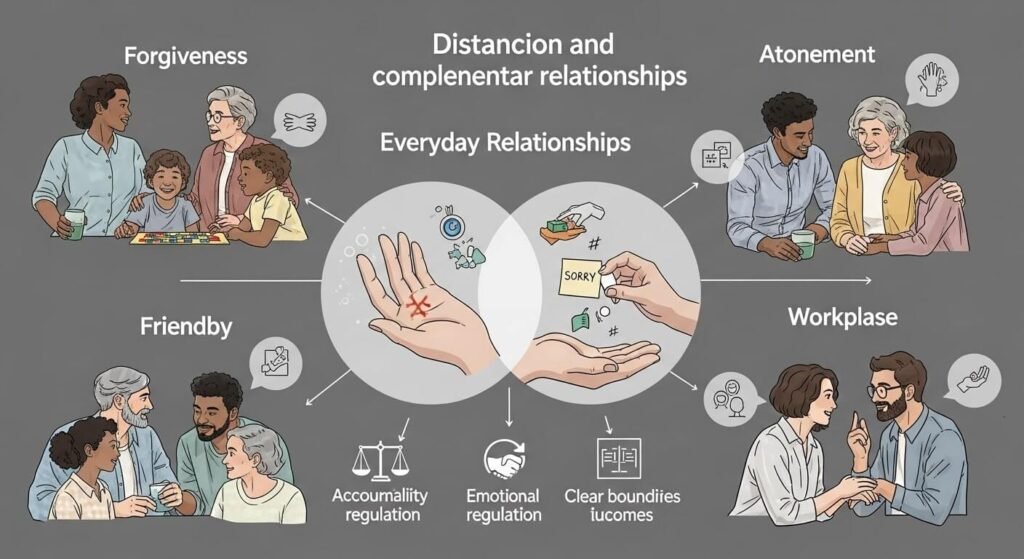
When forgiveness and atonement can be considered to be distinct, yet mutually complementary processes the chances are higher for relationships to flourish by respect, authenticity, and maturity in the emotional.
Frequently Asked Questions (FAQs)
1. What is the difference between forgiveness and atonement in the healing of the emotional wounds?
Atonement concentrates the accountability of and correctional actions by the person responsible for the harm, whereas forgiveness is an emotional choice made by the one who was injured.
2. Can emotional healing be achieved without forgiveness?
Is forgiveness a prerequisite for healing? The process of healing can be achieved through self-awareness and boundary setting along with emotional regulation. The process of forgiveness can aid in healing, but it’s not always necessary.
3. Do we need forgiveness in order to be able to move forward in our lives?
In some cases, forgiveness can ease emotional burdens, but moving forward is also possible by acceptance, understanding and personal development.
4. What is the role of atonement in building trust?
Atonement is a demonstration of the accountability of a consistent act and is vital to building trust and restoring emotional security.
5. Why are some people unable to forgive, even after the apology?
It depends on the readiness of the emotional and not just logic. Healing takes patience, security as well as emotional process.
6. Do boundaries and forgiveness coexist in harmony?
Do they have to be in harmony? Healthy forgiveness is often accompanied by clearly defined boundaries that are respectful and clear. The act of forgiveness helps to release emotions While boundaries ensure well-being and foster relationships that are rooted in respect for each other, and a long-lasting connection.
Conclusion
Atonement and forgiveness do not are identical, but they function best when they are taken in conjunction. Forgiveness is a choice that is made by the individual who was hurt in order to relieve the burden of emotional trauma. Atonement is the obligation of the person who has caused damage to take actions to repair the damage.
Healing is easier and more durable when neither is forced or imposed and both are acknowledged as distinct, but complimentary ways to emotional freedom and more healthy, positive relationships.