
Why do normal questions feel like personal attacks? Even neutral questions can feel sharp when people feel emotionally unseen or disconnected. This subtle emotional disconnect quietly influences workplaces, relationships, and self-worth.

This article examines the ways feelings of emotional disconnect, feeling unseen and anxiety can turn routine questions into personal attacks. It also explores how this shift in internal dynamics affects the way we behave, trust, and communication.
Table of Contents
- Why Feeling Seen Matters When Normal Questions Feel Like Personal Attacks
- How Emotional Connection Shapes Communication
- The Loss of Emotional Context
- Why Normal Questions Feel Like Personal Attacks Without Trust
- Negative Interpretation Bias Explained
- Invisibility Syndrome and Its Emotional Impact
- Why Everything Feels Personal
- Defensive Reactions as Emotional Protection
- The Rise of Hostile Attribution Bias
- When Silence Feels Like Judgment
- Overthinking and Emotional Insecurity
- The Cycle of Disconnection and Conflict
- Effects on Personal Relationships
- Effects on Professional Life
- Why This Is Not a Personal Flaw
- Rebuilding Emotional Safety
- Frequently Asked Questions
- Conclusion
Why Feeling Seen Matters When Normal Questions Feel Like Personal Attacks
Being noticed is more than just being seen.
It means being recognized—feeling acknowledged, valued, and appreciated emotionally. If this is the case, communicating feels secure. If it’s not even the most kind words are uneasy. Human beings rely on emotional signals to discern the meaning. Without these signals, the brain begins to guard itself.
This is where misunderstandings begin.
How Emotional Connection Shapes Communication
If emotional connections are present trust is established.
Trust allows people to be able to speak without anxiety.
A connected person interprets the question as a question of curiosity or coordination. Unconnected people interpret exactly the same thing as judgment or doubt. The words stay the same but the emotional lens alters everything.
This change is subtle, yet strong.
The Loss of Emotional Context
Words gain their tenderness from emotional context, revealing meaning beyond the surface of what is spoken.
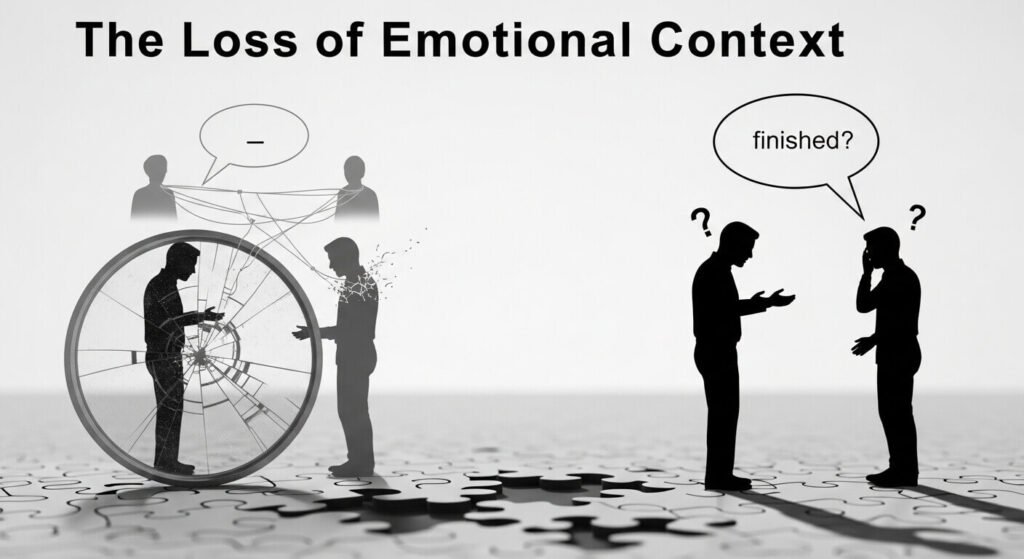
When emotional connections weaken, that context disappears. Without it, our brain struggles to interpret intent accurately. Even a simple question like ‘Are you done yet?’ can feel urgent, critical, or dismissive instead of neutral.
This isn’t overthinking.
This is the brain responding to the absence of emotion.
Why Normal Questions Feel Like Personal Attacks Without Trust
Questions depend on the trust of others.
Without trust it is easy to feel unsafe.
If someone is unable to see the person is insecure. Questions trigger anxiety. The mind believes there must be a hidden motive behind the question. Instead of listening to this question the individual is able to hear what they are most afraid of the most: fear of mistrust, dismay or rejection.
This is the way emotional disconnect transforms an uninvolved language into emotional pain.
Negative Interpretation Bias Explained
Negative interpretation bias is a result of the emotional safety of the person not present.
It causes people to believe that there is a negative intention in ambiguous circumstances.
If the connection is strong, any ambiguity feels safe. When the connection is weak the ambiguity is a threat. The brain is prone to self-protection instead of understanding, and each unclear signal is interpreted as fear.
This isn’t a deliberate bias.
It is an emotional conditioning.
Invisibility Syndrome and Its Emotional Impact
The Invisibility Syndrome is a condition in which a person is constantly feeling ignored or not heard. In time, this feeling is a belief that becomes internalized.
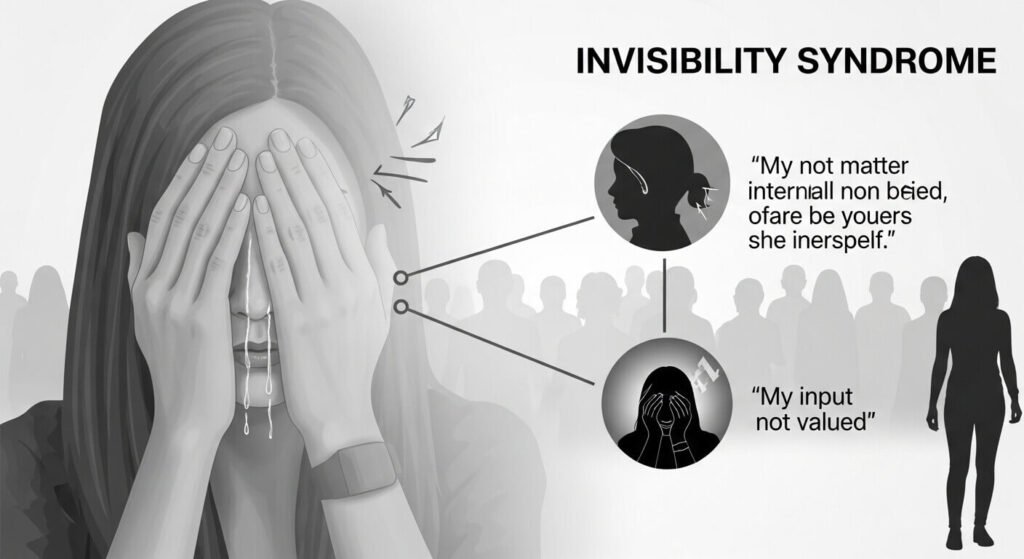
“I do not matter.”
“My input is not valued.”
Once this belief has formed the questions cease to be informational. They’re like evidence of low worth. The simple “Why did you choose this?” is transformed into “You don’t trust my judgment.”
The cause of pain is not from the issue.
It comes from the beliefs that underlie it.
Why Everything Feels Personal
If there is no emotional validation the self-worth is heightened.
The ego remains active.
When they are in this mode, the people are able to internalize all information. Neutral feedback feels like criticism. The feeling of curiosity is like an interrogation. It’s not arrogance or ego. It’s just an attempt to be vulnerable and survive.
Being unnoticed makes people feel more vulnerable emotionally.
Defensive Reactions as Emotional Protection
The term ‘defensiveness’ is often misunderstood as aggression. In reality, it is a form of self-protection.
When someone is ignored for a long time, their nervous system learns to anticipate being overlooked. As a result, asking questions can trigger that expectation, and the body reacts before logic has a chance to intervene.
These defensive responses are not consciously planned—they are learned emotional reactions.
The Rise of Hostile Attribution Bias
If emotional disconnect persists and the mind adjusts.
It begins to show hostility as a default.
This is also known as the hostile attribution bias–the tendencies to view unambiguous actions as critical or negative. In the absence of emotional connection the tone can be difficult to interpret. Silence is a feeling of being weighed down. The pauses are judgmental.
The lack of reassurance suffocates the communication with a figment of imagination.
When Silence Feels Like Judgment
Silence is neutral only if the connection is in place.
If you’re not feeling secure emotionally Silence can feel like a heavy weight. A pause feels like disappointment. A delayed response feels like rejection. The mind fills the quiet moments with doubt and anxiety.

This is why emotionally disconnected people often experience moments that feel confusing and incomprehensible.
Overthinking and Emotional Insecurity
Disconnection causes the brain to be more active.
It searches for meaning when clarity is lacking.
People replay conversations, look at the tone and ask questions about the motives. The the focus shifts from understanding towards self-defense. Overthinking is a way to cope for anxiety.
This mental exertion is exhausting and draining.
The Cycle of Disconnection and Conflict
It feeds on itself.
At first, the person is unable to feel seen.
Then, they think of negative intentions.
They react defensively.
The other person feels disengaged.
Connection weakens further.
Small miscommunications can lead to emotional distance. As time passes, relationships are fragile and communication is difficult.
Effects on Personal Relationships
In intimate relationships this kind of cycle can create emotional barriers.
People stop asking questions. Conversations get less interesting. Intimacy fades emotionally.
Friends, partners, and family members may feel confused, unaware that the root cause is emotional invisibility rather than actual disagreement.
Effects on Professional Life
In workplaces the pattern can affect the performance of employees and their trust.
Feedback feels as if it is threatening. Clarity feels crucial. Collaboration gets more tense.
This is not to do with skills or intelligence.
It is about the safety of your emotions in communicating.
Why This Is Not a Personal Flaw
The fact that you feel this way doesn’t necessarily mean that you are weak or apathetic.
It means your needs for emotional support are not being met.
The human brain is wired to connect. If that connection is not there, perception changes. Knowing this can remove the shame, and substitutes it for awareness.
Rebuilding Emotional Safety
The emotional safety of a person is restored by acknowledgment, not through perfectionism.
Hearing is key.
Feeling valued is important.
Small moments of validation help restore confidence.
If emotional connection is restored and questions are no longer arousing. It is a feeling of calmness. Communication becomes more clear and easy to understand.
Frequently Asked Questions
Why do simple questions upset me so deeply?
Since emotional connection is not present which causes the mind to believe that negative intentions are the cause.
Does this mean that there is security?
It’s the result of emotional conditioning, not weakness.
Could this pattern be changed?
Yes. The process of emotional safety and validation slowly return an appropriate interpretation.
Why is silence affecting me so greatly?
Since silence is a feeling of safety when the emotional connection is weak.
Conclusion
When people don’t feel acknowledged, the world feels harsher than it truly is.
Questions seem sharp, silence feels heavy, and intent appears unclear. The ego steps in to protect a fragile sense of self. What begins as a lack of emotional connection can gradually turn into an internal conflict of emotions.
Healing doesn’t begin with the right words—it begins with truly being seen.
When emotional connection is restored, questions regain their true purpose: to seek understanding, not to pass judgment.