
Many people believe that calm is a choice—that with enough effort, deep breathing, or positive thinking, peace should return. But when the nervous system is stuck in fight or flight, self soothing often feels impossible. This isn’t a lack of willpower; it’s a biological response where the body no longer recognizes safety.
If the nervous system is stuck in survival mode your ability to soothe yourself gradually diminishes. The emotions become more intense, the reactions quicker, and inner security is harder to reach. This isn’t an individual’s fault. It’s the nervous system working exactly how it was created to do: protect life at any cost.
Understanding how fight or flight affects emotion regulation can be the very first thing towards returning to calm, compassion and control.
Understanding the Nervous System’s Role in Emotional Regulation
The nervous system of the human body is constantly operating in the background making decisions about whether the world is safe or threatening. This is a process that happens automatically and without conscious awareness.
Two different systems govern this response:
- It is the parasympathetic nervous system that is responsible for rest and digestion, as well as connection and emotional comfort.
- The sympathetic nervous system is responsible for fighting or flight, or freezing when danger is identified
A healthy emotional regulation relies on the balance of the two systems. Stress is harmful when one system is dominant for a long period of time.
How Fight-or-Flight Overrides Self-Soothing
Self-soothing needs a sense of security. The body needs to believe that the threat has been eliminated before it can relax or reflect or process emotions.
Fight-or-flight is the reverse.
In the event of activation by the sympathetic nervous system:
- Raises heart rate
- Tightens muscles
- Enhances threat awareness
- It diverts energy away from processing emotions
In this state the body isn’t at all interested in being comfortable. It’s focused on survival.
This is the reason why self-soothing methods are often ineffective during stress. The nervous system doesn’t allow them access.
The Autonomic Nervous System: A Constant Internal Conflict
The sympathetic and parasympathetic systems work as opposite ends of a spectrum. When one increases while the other falls.
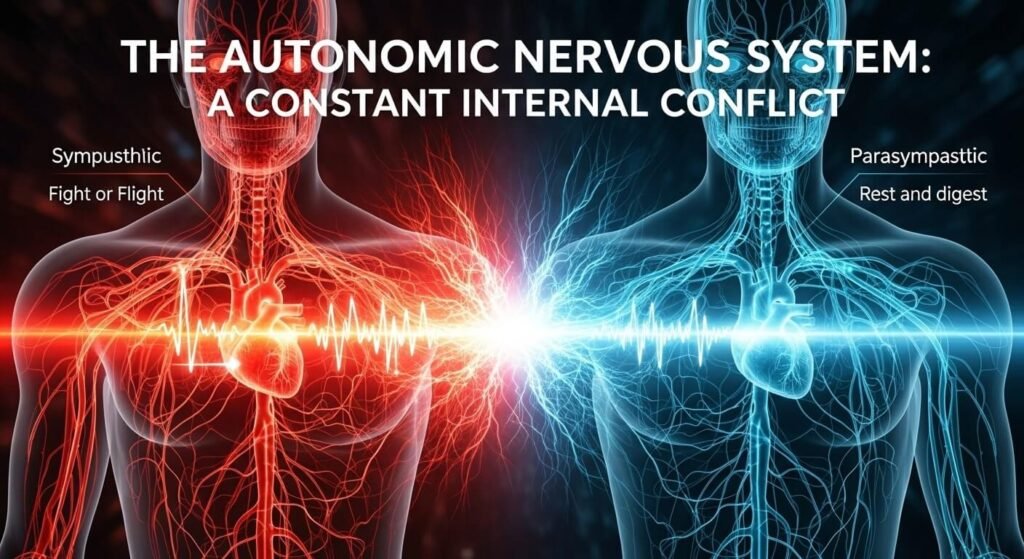
Self-soothing is a function of the parasympathetic nervous system.
Survival lives in the sympathetic system.
When fight or flight and self soothing are out of balance, the nervous system remains locked in survival mode, making emotional regulation feel unreachable.
When stress becomes continuous the sympathetic system remains active even if no immediate risk is present. The body is unable to recover to its normal.
In time, calm begins to feel uneasy, and feeling uncomfortable.
The Impact of Chronic Cortisol on Emotional Control
Cortisol is vital in short bursts. It provides the body with the energy needed to tackle challenges. However, if cortisol levels remain high for prolonged periods it starts to interfere with the body’s ability to regulate emotions.
Cortisol levels are high, which suppress the prefrontal cortex The part of the brain that is responsible for:
- Emotional intelligence
- Rational decision-making
- Impulse control
- Utilizing strategies for coping
If this area is weakened it is possible that people know what they ought to do, but feel incapable of doing it.
This disconnect can result in anger, shame and self-blame. This triggers your stress reaction.
Adrenaline and the Body’s Resistance to Calm
Adrenaline helps prepare the body to move, not just rest. It produces physical sensations that are directly opposed to self-soothing.
- Heart racing
- Rapid or shallow breathing
- Tension in the muscles
- Restlessness
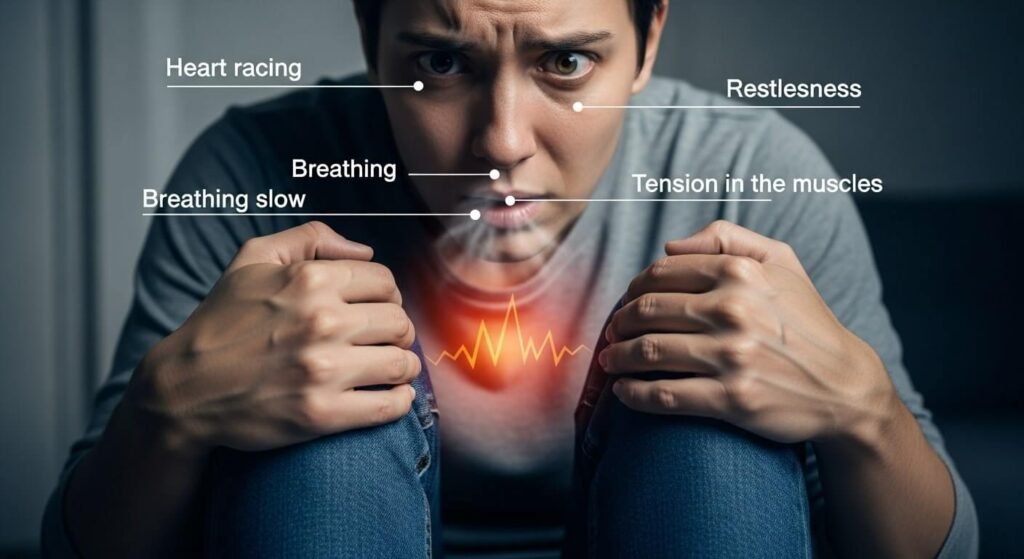
Self-soothing techniques are based on a slow breathing process and a calm mind that feel strange with adrenaline present.
That’s why sitting in silence in stressful times can be difficult. The body is awaiting the next step, not for the feeling of relaxation.
The Amygdala Hijack: When Survival Takes Control
If there is a sense of danger when there is a threat, the brain shifts direction to amygdala the emotional alarm center.
When an amygdala is hijacked:
- The intensity of emotional reactions increases
- Logical thinking declines
- Perspective narrows
- Self-reflection shuts down
Cognitive tools such as thinking about thoughts in a positive way, self-talk or mindfulness, require access to higher brain functions. When you are in survival mode, these functions are not available.
This is the reason why people often tell themselves, “I know what would help, but I can’t do it.”
Why Pausing Feels Unsafe in Survival Mode
Self-soothing usually requires slowing down. But the fight or flight mindset considers slowing down to be a sign of vulnerability.
The nervous system is a part of:
- Stopping equals danger
- In the end, stillness is exposure.
- Rest means loss of control
That’s why people with constant stress are often active and distracted or secure. The body associates tranquility with the risk of.
Maladaptive Coping: When Self-Soothing Is Out of Reach
In the event that regulation isn’t working, the nervous system searches for relief via alternatives.
Numbing Behaviors
Substances, eating too much scrolling, addictive habits decrease emotional intensity for a short time. However, they don’t restore equilibrium in the nervous system.
As time passes, numbing can lead to the feeling of disconnection and dependence.
Avoidance Patterns
The ability to avoid difficult situations can provide some relief in the short term, but also increases the likelihood that emotions can be dangerous.
This bolsters the fight-or-flight response, rather than solving it.
Hyper-Vigilance
Continuous alertness prevents the body from resting. Even at rest, the nervous system monitors for danger.
This is exhausting and destabilizing.
Relearning Safety: The Path Back to Self-Soothing
The process of healing is not based on the need to force the body to remain calm. It’s about showing the body that security can be achieved and again.
The aim is regulation not suppression.
Vagus Nerve Activation and Emotional Safety
The vagus nerve links the brain with the parasympathetic nerve system. Its activation signals security at an atomic level.
Slow, deep breathing – especially longer exhales – calms the nervous system gently.
Technique is more important than consistency.
Sensory Regulation and Grounding
The body is incredibly responsive to signals from the senses. Pressure, warmth and rhythm convey the sense of security without using words.
The most useful tools are:
- Blankets with weights
- Warm showers or baths
- Soft music
- Gentle touch
These signals keep the nervous system to the current moment.
Mindful Movement as Nervous System Repair
For many, the feeling of being in a solitary state is overwhelming for many people. Moving with ease is a safer entrance point.
Yoga, stretching, walking or a slow and steady rhythmic movement helps release tension while keeping the feeling of control.
It is comforting to the body that it will slow down.
Emotional Regulation Is a Learned Skill
Self-soothing is not something you lose. During prolonged stress, it can simply become harder to access.
With patience, repetition, and an understanding of how the nervous system works, the body can relearn a sense of calm and safety.
Progress may unfold gradually and unevenly, but meaningful change is always possible.
Frequently Asked Questions (FAQs)
What’s wrong with me? Why can’t I relax regardless of my efforts?
Your nervous system is in the survival mode. The key to calm is the safety of your body, not a lot of effort.
Does fight-or flight only result from trauma?
No. Continuous stress, emotional neglect burning out, chronic stress, or even chronic anxiety all can maintain the nervous system active.
Can self-soothing be taught?
Yes. By implementing consistent regulation techniques the nervous system will restore its ability to be at peace.
How come coping strategies cease working when stressed?
Since the brain regions required to use them are temporarily shut off during the survival phase.
Do physical activities really aid in regulating your emotions?
Yes. Gentle movement can help relieve stress and tension without overloading the nervous system.
Conclusion: From Survival to Safety
Inability to self-soothe does not necessarily mean that something is going on. It’s a sign that your nervous system is at work to defend your self-soothing.
If survival is the default mode, peace appears distant. However, distance isn’t disappearing.
Through understanding the biological causes of fight-or-flight, and approaching healing through patience rather than pressure, you can regain your safety. Resilience in emotions can be restored by force, but rather through confidence.
Healing begins with understanding how fight or flight and self soothing interact within the nervous system, rather than forcing calm.